Showing posts with label drop and run. Show all posts

Wednesday, March 4, 2020

True Confessions Wednesday: I Know What I Want

True Confession #19: I want what I want because I know what I need.

For the past few weeks, I've been trying to figure out how to create an unobtrusive drop spot for my school folders that is true to my styles. While the fact that it's a drop spot (or it will be) makes it a perfect fit for my drop and run organizational style, the idea of unobtrusive is a challenge for my I need to see it personal style.

I've been at this long enough to have learned that when I know what I want the end result to be, but I'm not sure how to get there, I need to be patient. Turning all the related questions over in my mind allows me to consider all the possibilities until one snaps into place.

And it almost always does.
When I shared my dilemma with my husband, he immediately suggested my office, which sounds perfectly logical coming from someone with an I know I put it somewhere organizational style, but fails both the drop and run and I need to see it tests. My office is as far from the door I use to enter the house as it could possibly be, making that location neither accessible nor visible. While my drop spot needs to be somewhat tucked away so things don't look cluttered, it also needs to be close to where I pack up (and drop) my supplies each day.

Long story short, I determined a potential location on Saturday and on Sunday, I suddenly knew exactly which tool I needed to make things work. As I write this, I'm awaiting its arrival, looking forward to seeing how it works. I suspect I'll end up taking apart what's already there and relocating some of it, but that's not such a bad idea. The space I've identified is one of those where the things that live there landed there and just stayed. Rethinking their location and giving them intentional homes might be a bonus I hadn't considered when I started thinking about my drop spot. 

One of the benefits of learning how to work with our styles is that we get good at figuring out what we need to make a space work, I've reached the point where I know precisely what I want and what I don't want because I know my styles. While it might take me a little bit of brainstorming before that lighting bolt answer arrives, once that happens, I usually arrive at a long-term solution that everyone can live with. I rarely waste money on tools that don't work and I often improve the spaces surrounding the target area as well.

When it comes to organizing by STYLE, I've found that practice does make perfect -- or at least it provides a shortcut to easy upkeep.


Thursday, December 27, 2018

3 Keys Thursday: 3 Key Reminders for Organizational Works-in-Progress

DodgertonSkillhause via Morguefile
When it comes to organization, I'm a work-in-progress. I know what works for me, I know what to do and I know how to do it.

The trouble is, those things don't take me all the way to the finish line which means that even though I am organized, I don't always look organized. When time and energy cooperate, I generally come out on the winning end of the organization bargain, but often, they don't and I'm left with a gap between what I know and what I can accomplish. This annoys me, but even worse, it leaves me feeling vulnerable and somewhat lacking in the sense of humor department, especially when I get teased about my I need to see it piles.

At one time or another, I think that all of us feel like organization frauds. Whether it's our I need to see it or drop and run piles that give us away, or the I know I put it somewhere or cram and jam styles that leave us hoping guests won't look beyond our clear surfaces to see what's hiding behind door #1, we're always a little insecure about whether or not we're doing this organization thing right.

More often than not, we are, especially since "right" is defined by the user of the system. If we can find what we want when we want it, we're functionally organized, which is what matters most.

Still, there are those days when logic is insufficient to compensate for our organizational insecurities. Here are a few key pieces of advice for "one of those days."

Ditch perfection. No one is perfectly organized. Ask any Type A organizer to point to the flaws in her system, and she'll probably give you a list. Although a perfectly organized home and/or office is lovely, there's so much more to life than chasing organizational perfection. Know when to walk away from that need for perfection and read a book, take a nap or spend time with the people you love.

Start with successes. This first step in the STYLE process is meant to remind us of the things we're doing right. As an I need to see it/drop and run girl, I've learned what works for me but often, instead of seeing all the things I'm doing right, I focus on the piles of homeless items that seem to pop up relentlessly. If you must focus on what remains to be done (and, some days, we must), remember to counterbalance it with all you've learned and accomplished so far. Chances are, that will tip the scales in your favor (even if some organizing remains to be done).

Remember that it's a process. Thanks to a steady flow of items into our homes, whether groceries possessions, or some combination of the two, organizing is one of those life tasks that is never finished. In some ways, this is a good thing. Putting strategies in place that keep things from crossing over to the organizational dark side helps to stem the tide and gives us practice building organizational skills that work for us so that, over time, we become more efficient.
Pixabay

Accepting that when it comes to organization, things will never be perfect or finished can encourage us to cut ourselves a little slack. Once we stop beating ourselves up, we can use that misplaced energy to put a few more things away or come up with a new strategy that makes life easier.

Or maybe even develop a sense of humor.

Wednesday, August 15, 2018

Back-to-School Shopping for Kids Who Organize Differently

toodlingstudio via Pixabay
Have you ever watched a left-handed person try to take notes in a traditional spiral notebook? It's almost painful. The angle is wrong, the spiral's in the wrong place, and even the neatest handwriting approaches illegibility as fatigue and frustration take over.

That's how it feels to be a non-traditional organizer using traditional school supplies. While everyone around you slides papers neatly onto binder rings or into the pockets of folders, you just never manage to make things work as neatly and effortlessly.

So...why buy those supplies?

If you've got a kiddo (or two) at your house whose notebooks and folders look like they've been through a natural disaster somewhere between school and home, help them adapt their supplies to their styles. 

Ways to adapt a binder:
  • Buy a portable three-hole punch to put in the front of the notebook.
  • Load the binder with page protectors so unpunched papers make it into the notebook. Or, if that's not gonna happen with your cram and jammer or drop and run organizer, try folder pockets (hole-punched inserts that look like a pocket folder opened up and folded back) or a three-ring acetate envelope with a snap or Velcro fastener.
    When I taught Organizing by STYLE
    to an elementary school audience,
    I found that clamp binders were a
    huge hit with fifth grade boys.
    Photo: staples.com
  • Add a clip to the front of the binder so the day's papers get clipped inside the cover and can be added to the right section of the notebook at home.
  • Ditch the three-ring binder for one with a spring-loaded clamp. Kids who don't take the time to put stuff into the rings sometimes enjoy putting papers away when they have an excuse to play with the clamp.
  • Replace the binder with an accordion folder. Choose one that's divided into sections, or one with just one wide, yawning opening, depending on your child's style.
What to use instead of a standard-issue, paper pocket folder:
  • A file folder. Like pocket folders, these come in a variety of colors, and can be color-coded by subject. If the papers aren't going to go in the pockets anyway, why create an unnecessary battle?
  • Transparent folders that allow kids to personalize them (photos show through the opening) or see what's inside. These also come in a variety of colors, with and without pockets.
  • A folder that has top and side access and a tab closure at the top. Multi-colored (again). Never underestimate the value of being able to play with an organizational tool. The more fun it is to put something away, the more likely it is it'll get there.
  • Clear acetate envelopes with string-tie and button closures. Sold at office supply stores, these often come in multi-packs that make them less expensive per item. 
avery.com
Admittedly, these choices are often more expensive and harder to come by, but in many cases, the time and heartache saved makes it worth the extra cash and detective work -- and sometimes, you actually luck out and find cool tools at the dollar store or the clearance racks. When I taught lessons in elementary school classrooms, I brought a variety of supplies in for kids to play with and had them trouble-shoot potential issues. They were amazingly astute when it came to figuring out what they would and would not use, and they often loved things that cost a dollar or less (colorful report folders with hinged closures were a big hit) as much as the more expensive office supply items. 

As you discuss back-to-school shopping with your child, use this summary sheet to talk about options and highlight his or her choices. Having him (or her) talk through the choices is an important part of getting your child to understand his or her styles, and eventually, to advocate for them. When we teach our kids to respectfully advocate for themselves, we're teaching a skill that goes far beyond organization.

You may also need to intervene on your child's behalf with his or her teacher, and that may or may not go over well. Together with your child, decide if it's better to work within the requirements (buy the required binder, but adapt its insides so your child can use it successfully) or seek the teacher's stamp of approval for an alternative system. If your child's teacher understands that the required tool is actually a stumbling block, he or she may be amenable to a trial period with something else. Most teachers are happy to see their students attempt organization, no matter what the tools, and in the best case scenario, your child may find an ally who helps to tweak and perfect the plan at school. 

So before you and your credit card hit the stores and start checking off items on that school supply list, take a moment to make sure you're supplying your child with the tools he or she needs to have a great year.

Thursday, May 24, 2018

3 Keys Thursday: 3 Key Pieces on Organizing by STYLE

Photo: Dodgerton Skillhause via Morguefile
In addition to writing about Organizing by STYLE here, I also blog about it at CatholicMom.com and  sometimes for print magazines and online publications as well. Last spring, three of the pieces I wrote for the Today's Catholic Teacher website focused on a pairing: one of the personal styles and one of the organizational styles. Entitled "Exploring the Way We Organize by STYLE," each piece went into two of the styles in a bit more detail. Since the styles are mix and match, so to speak, the styles didn't necessarily work together as a pair, but the pieces were, as the title suggests, a way of exploring one personal style and one organizational style.

I was reminded of these pieces as I put together my presentation for the Pennwriters conference last weekend, where I introduced Organizing by STYLE to writers. It occurred to me that it might be a good idea to share these pieces here as a way of getting back to basics and/or zooming in on each of the styles.

So here they are: the links to the pieces. Still not sure of your style? Try taking the Styles Quiz, then use the information below to find out how to make those styles work for you.

Exploring the Way We Organize by STYLE: I Need to See it and Drop and Run

Exploring the Way We Organize by STYLE: I Love Stuff and I Know I Put it Somewhere

Exploring the Way We Organize by STYLE: I Love to Be Busy and Cram and Jam

Which styles hold the key to your organizational success?

Wednesday, April 18, 2018

Office Intervention Part 3B: Short-Term Stalemate

My office intervention is at a temporary standstill. The end of the semester is just two weeks away and other priorities have to be front and center -- there's just no way around it.

But this isn't all bad. Though my intervention activities have shifted, my temporary inability to devote time to making headway gives me a perfect opportunity for practicing the E in STYLE: Easy upkeep.

Or, in everyday terms, can I keep the clear spaces clear? This is, after all, the goal of getting organized in the first place -- creating systems that are sustainable and that fit into our everyday lives.

So far, so good, with the exception of a textbook that needs to find a home. It's actually been pretty easy to curb my drop and run tendencies with respect to my office counter. I like the way the clear space on the counter looks too much to mess it up. And, perhaps just as important, I found permanent new homes for the things that were taking up that space.

So, as the semester winds down and the end-of-semester workload winds up, my intervention has been reduced to picking up this and tossing that in an effort to take small steps that will keep this necessary project going. Motivated by the clear space, I am ready to reduce the piles, even if it means getting rid of things -- perhaps especially so. If it's gone for good, I don't need to deal with it again, which simplifies future organizing tremendously.

Do you struggle with the important but necessary step of getting rid of things? Check out this post for a short list of a few easy-to-part-with items and some style-specific advice.

Meanwhile, where is the upkeep easy at your house?

Thursday, August 10, 2017

From So-So to Spectacular

Dodgerton Skillhause via Morguefile
Yesterday's post left me with a lingering question:
What other storage habits do I need to reconsider? 
Unless you've recently moved, renovated or redecorated, you probably haven't updated your organizational set-up recently. Like the squeaky wheel, organizational systems typically get attention only when they aren't working.

Still, as my flag storage plan reminded me, we sometimes settle for "good enough" when one small change could make a big difference. And, we sometimes don't even know we're doing it.

Often, the first sign that we need to make a change is that things aren't getting retrieved or put away in a timely manner. While we often point to ourselves (or someone else in the house) as the problem, there's often a deeper issue at work. Three simple questions can be the key to turning so-so systems into storage solutions.
  • Is the system easy to use? An overly complicated storage system is sometimes as bad as none at all. When putting things away is difficult, we choose the path of least resistance, putting things down instead of away (drop and run organizers), putting them wherever there is space (I know I put it somewhere organizers) or stuffing them somewhere (cram and jammers). When we do this, we exacerbate the problem, creating a retrieval issue. Drop and run organizers must retrace their steps and dig through piles. I know I put it somewhere organizers race around frantically trying to remember which safe place they put the necessary item in and cram and jammers attempt to retrieve things from overstuffed spaces, hoping the thing they're searching for won't be crumpled, torn or broken when they find it. In the process, we waste time, frustrate ourselves and often create chaos. Often, however, it's this process that reveals the answer to the questions behind this problem: what's stopping me from using this system and how can I fix that?
  • Is it in the right place? Similarly, if we have to climb ladders, move piles or take a cupboard apart to find something we use with any degree of frequency, it's in the wrong place. While it makes sense to store things we use only occasionally in out-of-the-way locations (especially when space is an issue), the things we use more often need to be easier to access. Store it where it's used, store frequently used items in easy-to-access places and store similar items together.
  • Do I like it? Although this might not affect how well the system works, it can affect how likely we are to use it. If it's fantabulously functional (a worn accordion file with just the right number of labeled sections, for example), we might not care how it looks, especially if we tuck it away in a drawer or closet. But, if you're taking your system from so-so to spectacular, the aesthetics of containers and systems are worth considering.
In the best of all possible circumstances, a simple change in location makes a big difference, as it did for my garden flags. Other times, some shopping, sorting and re-organizing is required, but if these steps create a more efficient system, the time to put it all together is time well spent. Not only will it reduce your clutter, as sorting often does, but it will also save you time.

Best of all, you'll be too busy taking pride in your new system to have time to point the finger of blame at anyone, including yourself.

Alexas Fotos via Pixabay


Thursday, July 13, 2017

3 Key Concepts for the Drop and Run Organizational Style

Dodgerton Skillhause via Morguefile

Drop and run organizers are often busy, busy, busy. Running from one task to another, they tell themselves they'll put something away later, when they have more time, but, before they know it, piles are encroaching.

Everywhere. 

As always, the key is to work with the style in question to make it as easy to put something away as it is to put it down.


  • When it comes to organizing, those with the drop and run organizational style benefit from open storage. Lids and multi-step systems are unnecessary barriers to putting things where they belong. Aim to make it just as easy to drop things where they belong before running to the next thing as it is to drop them where they don't belong by choosing containers that make this possible. This simple choice not only improves the look of a space, but also makes staying organized (almost) effortless.
  • When it comes to list-making, drop and run organizers benefit from "dropping" an idea onto a list before running to the next thing on the schedule. Creating lists on a medium that travels with you, whether it's your phone or a pad of paper tucked into a bag, makes it more likely that you'll remember appointments and other to-dos, and, more important, you'll know where to find them.
  • As for goal-setting, the drop and run organizer is likely to need something to help him or her stay focused. Used to operating out of piles, the drop and run organizer is in danger of starting down one path only to be lured onto another by tempting materials nearby. Setting daily goals via a to-do list and keeping long-term goals close by can help keep distraction under control.

If you're a drop and run organizer, what key ideas do you swear by? Share in the comments below. 

For more ideas on the drop and run organizational style, check out my original post here


For printable information sheets 
about containers and the styles, 
click on the CHARTS tab at the top of this page.

Thursday, July 6, 2017

Location by Style

freepik.com
Yesterday, I wrote about location on vacation. Today, I am attending a family funeral, so I'm taking a break from my style-by-style posts (3 Key Concepts) posts and sharing a previous post on location and the styles. 3 Key Concepts will return next week.

My mom was a big believer in the old adage, "a place for everything, and everything in its place." I don't know about you, but I've always found that phrase (attributed to Benjamin Franklin, by the way) intimidating. Nothing like a little perfectionism to make us feel bad about an almost clean space. Maybe Benjamin Franklin was a minimalist (he did travel a lot). Or a Type A organizer.

But I digress.

For our purposes, let's eliminate the perfectionism inherent in the second half of the philosophy and focus on the first part: A place for everything. This is the part we can make happen when we tackle the Y in STYLE ("Yes, it has a home!") and apply our styles to our systems. 

What does that look like? As always, it depends on your styles.

I love stuff people are good at putting things together, sometimes in unconventional ways, which is a key concept behind choosing good homes for their things. Often collectors, folks with this style already understand the importance of storing similar items together, and may come up with creative combinations that make storage fun. 

I need to see it people are good at putting things where they can see them, and therefore, find themBuilding systems on visual cues (like labels and color coding) can help folks with this style to make the transition from putting things down to putting them away so that they worry less about another adage: out of sight, out of mind. 

I love to be busy people are good at categorizing. Keeping track of the supplies for their many activities gives them lots of practice at deciding which groups of items should go where. Running from one activity to the next has usually convinced them of the importance of this concept, which allows them to grab and go.

Designed by freepik

Cram and jam people are good at simplifying; if it's all in one spot, it's easy to find. Learning to separate their belongings into containers by category allows them to expand their storage and protect their belongings.

Drop and run. people are good at backtracking to find things. Retracing their steps (which they do often) may lead them to determine locations that make sense, based on where they naturally drop things, allowing them to build a system based on their natural habits. 

I know I put it somewhere people are good at putting things away, making them great at finding homes for things. Learning to make those homes logical, rather than haphazard, is the key to their location success.

Every once in a while, we need to be reminded that even if our homes don't embody the "a place for everything, and everything in its place" philosophy, we're moving in the right direction. Finding consistent, logical homes for our things is possible when we remember to view our styles as strengths, and plan our systems accordingly.

Wednesday, April 26, 2017

Attacking My Files with STYLE

The end of the semester is rapidly approaching and my plate is full. Today, in fact, is a full-out backwards to-do list kind of day.

Definitely the season for 5 Small Things.

But last weekend, I decided to follow through on some brainstorming I'd done one night when I couldn't fall asleep. Exponentially increasing to-do lists tend to have both those effects on me -- difficulty sleeping and an increased desire to do things besides the most pressing things on my to-do list (a.k.a. structured procrastination).

But I digress.

Spurred by a short spurt earlier this month spent clearing space on the counter in my office, I wanted to keep the momentum going. This meant not only clearing more space on the counter, but also streamlining some organizational systems. A few projects in progress were encroaching on the counter (dropped there and left there by a rogue drop and run organizer) because they'd outgrown their assigned spaces. And, in one case, I was unhappy with the assigned space itself; while it worked well for my styles, it was too small to house everything it needed to house.

Clearly, it was time for an organization intervention. Enter STYLE.
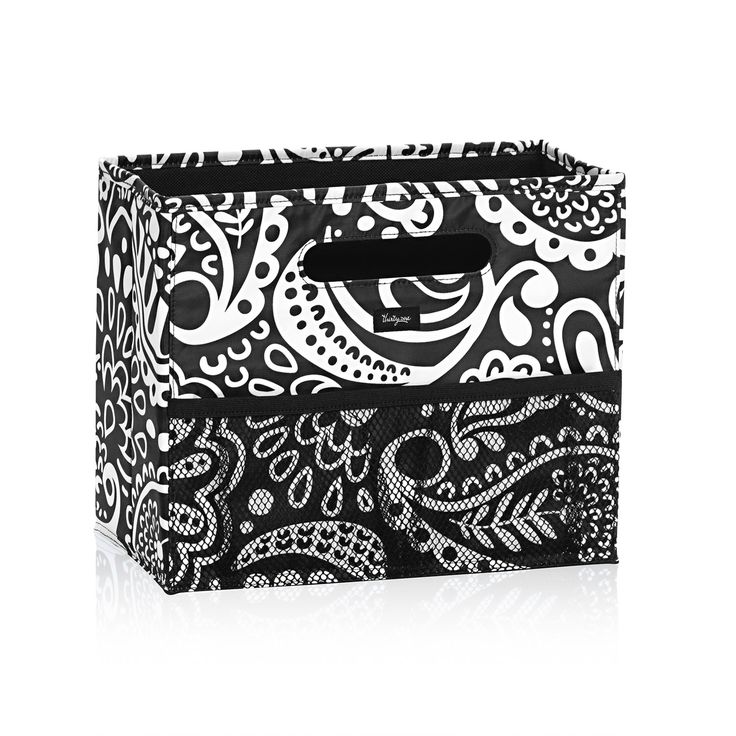
I have an entire collection of these fabric
file boxes from Thirty-One Gifts because
they're perfect for my I need to see it/
drop and run
styles.

  • The successes: The open-top file holder on the counter did a good job of keeping my labeled files in order (successful plan), but I'd expanded it as far as I could, and had resorted to stacking things on top of it (unsuccessful implementation). I needed to replicate the concept in a bigger space.
  • Small steps: The small file cabinet in my office had become more of an archive than a functioning organizational system. I'd initially considered moving it out of the office and replacing it with open storage, but that was too big a task for the time I had available. Instead, I started by sorting through the bottom drawer to toss outdated files and move materials to be "archived" out of prime real estate. This  freed up space I could then use to house the materials from the overstuffed countertop file.
  • Yes, it has a home: Archived files, all of which could be filed under two topics, needed a new home. For now, they are in a file holder in the basement. Labeled. This gives me time to consider whether or not their current home will be their permanent destination. Meanwhile, I moved the active materials into their new home in the now-much-lighter bottom file drawer.
  • Let it go: Any time we sort any place (counter, file drawer, desktop, closet) is a perfect time to get rid of anything outdated, uninteresting or no longer of use. I'm happy to say I did some shredding and recycling, reducing all of the piles involved. Less stuff means fewer homeless items and more streamlined storage.
  • Easy upkeep: Moving from an open file to a file drawer is a major test for an I need to see it personal style. Because I moved a big chunk of materials I will access frequently into the same (closed) space, I am optimistic that out of sight won't mean out of mind. Labeled file folders allow me to accommodate my drop and run organizational style, and, if necessary, I can label the drawer as well to create a visual reminder of its contents. Even better, because there's room to grow, the new home for my files should last a while.
While it's rare that I go through the STYLE process start-to-finish in one day, (let alone only part of one), it's possible to do so when the goal is updating systems that are already soundly STYLE-based. In this case, an investment of a couple of hours yielded a beautiful, empty counter. 

Do you have a system that needs revamping? Which step of the STYLE process can you take today? 


Thursday, February 9, 2017

3 Keys Thursday: 3 Key Questions to Ask About those Piles

Dodgerton Skillhause via Morguefile
If you're a regular reader of this blog, you know I'm an I need to see it/drop and run person.

This combination makes me the Queen of Piles.

This drives my husband a little bit crazy, and, truth be told, it bugs me, too.  While I'm still very much a work-in-progress, I have found a few ways to deal with the piles, and even make some of them go away.

Do you put things down instead of away? Here are three questions to ask yourself so you can do things the other way around.

Is it always the same stuff? At my house, it's usually the homeless items that end up in piles (next to the things I don't want to forget to take care of). While I can't quite bring myself to get rid of the reminder piles, eliminating the piles of homeless items is as simple as finding them a home.

Is it always the same place? Most homes have spots that are clutter catchers -- the kitchen counter, the dining room table, the dresser in the bedroom. Ask yourself whether the items that are piled there should be stored nearby, or if the spot is merely convenient. Then, organize accordingly.

Will a strategically placed container solve the problem? If so, maybe, just maybe you can keep the pile. Just make sure that the container is sized properly. Too big, and you'll lose sight of what you need. Too small, and you might as well just keep the original pile.

As an I need to see it/drop and run person, I've come to terms with the fact that piles are a part of my life. But, by asking some strategic questions and employing the right tools, I can keep them to a minimum.


Wednesday, October 26, 2016

Taking Stock

Photo: Lauren Mancke via Minimography
I am the sort of person who leaves multiple windows open on her computer. (Multiple doesn't begin to describe it). When I discovered that I could create a dozen or more different desktops on my MacBook, this made me love my laptop even more than I already did.

Any guesses what my predominant style is?

Whether our styles reveal themselves in an unmistakeable I need to see it, drop and run or cram and jam fashion, or in a subtler, more nuanced way, we all need to pause and take stock sometimes. For me, last Saturday was that time. This was not surprising; the end of the month was, at that time, a little more than a week away.

So, I set out to make a master list that would enable me to replace the visual clutter with one neat list. My goal was to close out the open windows on my computer and streamline the to-do lists on my desk.

I started out with one measly piece of paper, but quickly decided that to really get my house in order, I needed separate pages for key categories. This method would accomplish two things: it would organize my thoughts (by category) and keep my lists shorter, and therefore less overwhelming. I briefly considered going back to the color-coded list format I use in the summer, but decided that I'd be better off with pages in a notebook.

So, armed with my calendar, my work to-do notebook (each class has its own column) and my spiral-bound notebook, I dug in.

First stop: my laptop. I had tabs open in my browser for articles I wanted to read, use for blogs or reference for class, along with references for writing projects. I had presentations in various stages of completion, some old (for reference) and some current. I had writing projects galore. Beginning with the browser tabs, I took one thing at a time, adding each to the appropriate list and then closing it out.  Because it's easier to access links by simply clicking on them, I created a master list of the links I had open and wanted to return to and emailed it to myself. Now, instead of leaving all those tabs open, I simply have to open the email and click on the link I want.

Second stop: all those notes on my desk. This part was easy, because, as it turns out, there weren't that many of them. Apparently my paper system is working better than my electronic system -- something that was a nice surprise, but, in retrospect, shouldn't have been surprising at all. I am, at heart, a paper-and-pencil girl.

Third stop (which perhaps should have been first): the multiple piles that scream, "An I need to see it/drop and run person lives here!" Why weren't they first? Because I'm more organized than I look. The really important, to-do list qualifying stuff is on my computer or my desk.

As I worked on the list, a funny thing happened: I started to get really excited about tackling all of the things I was writing down. While visual reminders can be helpful, having too many of them for too long can become exhausting, and therefore counterproductive. After a while, they all blend together and become a congealed mass of things to do.

Thank goodness I have my nice, neat list.

Wednesday, September 21, 2016

A Place for Everything, An Item for Every Drawer

Now this would be a cool
addition to my office!
Photo: Pixabay
In my office, I have two unassigned drawers -- that is to say that they currently serve as "home" to no specific items. One has served several purposes, but, because of my I need to see it style, none of those plans have stuck. Right now, it holds some writing projects and some "miscellaneous files" (always bad news from an organizational perspective), but I wouldn't call the space well-utilized.

The other is drawer is a small one, the lone, empty drawer in a three-drawer unit. Its companions hold, among other things, FitBit wristbands and toilet paper tubes decorated with washi tape and pressed into service as cord storage. Unlike my drawer-in-limbo, it's an organizational coup -- easy to use and in keeping with my styles, I can find what I'm looking for in under five seconds. Because these small drawers have clear, labeled fronts, I can not only glimpse the contents, but I also know what's inside even before I open them -- the labels remove all the mystery.

As an I need to see it person, I need this, ahem, transparency. That's why my wonderful, large drawer with projects and miscellany is a drawer in limbo in a room that still has piles that need sorting. I could take a page out of the I know I put it somewhere handbook and transfer the stacks from my counter (which looks much better this week, I must say) to the drawer. Unfortunately, that would simply hide the problem, rather than solving it; my counter would look better, but I wouldn't be any more organized. Worse yet, those papers could sit in that drawer, hidden from sight, for years before I paid attention to them again, which means that I'm taking a significant risk if I put anything important or time sensitive in that wonderful, practically empty space.

Meanwhile, in another spot in the office, a rolling bin has been pressed into service as file storage for my active class files. Previously, it collected dust as the official storage place for all of my notes on organization, but, when I needed a place (besides the chair in the living room) to keep my class files, I rethought the plan. I moved the organization files -- which I don't need to access on a daily basis -- to the family room to create space in my office for the files I touch every day.

What, you may ask, is the purpose of all of these stories?

Balance.

Balance between overstuffed and just right = room to grow (my empty/unassigned drawers).

Balance between my I need to see it personal style and my drop and run organizational style = a "just right" container that allows me to put things away (instead of down) in a place where they're visually accessible.

Balance between the easy answer and the one that makes sense = time + patience + trial + error.

Pixabay
It's amazing how easily we fall into -- and stay stuck in -- habits that don't work. Getting organized and staying organized means constantly reassessing what goes where and whether or not the storage we choose is the best choice. It means finding what works and replicating it so that eventually, everything has a home that's as easy to use as the default surface we choose when we're too exhausted to put things where they belong.

Needless to say, it's a process.

And sometimes, empty drawers share space with homeless piles.

Thursday, September 8, 2016

3 Keys Thursday: 3 Keys to Overcoming Motivational Obstacles Unique to Your Styles

Dodgerton Skillhause via Morguefile
I've been writing about Organizing by STYLE for over a decade, so you'd think I'd have discovered the link between my styles and motivation long ago. Not true. In reality, it took me until last weekend to make the connection.

Thankfully, the solution was an easy one; merely listing my accomplishments at the end of the day took them from invisible to visible, satisfying my I need to see it personal style and salvaging my motivation (and my pride).

Yesterday, I wrote about the motivation issues that may arise naturally from our personal and organizational styles, so today, I'd like to share three keys to bringing motivation back.

Listing. While these serve as proof of accomplishment for the I need to see it personal style, they serve as item locators for those with the I know I put it somewhere organizational style. Being unable to find something you've stored "in a safe place" is a real motivation killer. Cheat sheets bring order and a system to the sometimes haphazard organization of the  I know I put it somewhere organizer.

Chunking. A popular strategy for saving time (run all the errands that are in geographic proximity at the same time) and memory (chunk bits of information into related groups (think of phone numbers) to get more information into short term memory), chunking can work as a motivator, too. The I love to be busy person can actually see progress when he or she breaks organizational tasks into bite-sized pieces that can realistically be accomplished between meetings, appointments and practices. The drop and run organizer can save time digging through piles if each pile ("chunk") contains one category of items. It may take a little creative dropping, getting into the habit of putting all the items for one activity in the same spot, but it's the beginning of a system.

Containing. Choosing containers that match our styles increase our motivation to put things away instead of down, and to use the organizational systems we set up. Cram and jammers whose containers are large and/or flexible are less likely be defeated by crumpled, ripped or broken items. I love stuff folks protect their collections by containing them in ways that keep them safe and out of harm's way.

It's hard not to get discouraged when our styles don't match those of our Type A organizer friends, but remember that consistency is key, no matter your styles. Finding tools that work and using those tools consistently leads to habits and systems that work because they've arisen out of what comes naturally. Celebrating small successes and using tools whose form, function and style are a good fit for you keeps motivation high and the piles of stuff low.

Even better? It feels a lot less like work.

Wednesday, September 7, 2016

Motivational Mishaps

Created with Canva
Last weekend, I discovered one of the drawbacks of the I need to see it personal style. I don't know why it surprised me (but it did), and it got me thinking about the drawbacks that accompany the other styles.

Let me assuage any fears that this is going to be a "beat up on the styles" post. I hope you know by now that's not my, um, style. We're all aware of the drawbacks of our lovely styles when it comes to organization. What occurred to me the other day is that they get in our way from a motivation perspective as well.

As an I need to see it person, I tend to downplay any progress I can't see. I can spend an entire day chipping away at things that need to be done, but if I can't see any difference by the end of the day, I feel as though I've done nothing.

Those with a cram and jam or I know I put it somewhere organizational style can have exactly the opposite problem. They think they're more organized than they actually are. Because things are put away--all in one place for the cram and jammer and without an overall plan for the  I know I put it somewhere organizer--they look organized. Other people (unsuspecting parents, teachers and spouses, for example) might even believe the cram and jammers and I know I put it somewhere organizers are organized--until they look more closely. Then, when they can't find what they need, those with these styles are often blindsided, embarrassed and overwhelmed.

People with an I love stuff personal style may have a similar problem. To them, their collections and piles are organized, and their love of their belongings makes them resistant to any recategorizing of their beloved treasures. Change is hard for the person who has all her stuff just the way she wants it.

Time, or the lack of it, can be a motivation killer for other styles. Drop and run organizers often rely on time as a retrieval cue, as in, "no, it can't be that deep in the pile because these papers are from last week," leading them to struggle to find things that don't adhere to the drop and run schedule hierarchy. Folks with an I love to be busy personal style may never feel fully organized due to time constraints and may constantly feel that they're playing catch-up when it comes to getting their supplies for even one activity organized.

Is it any wonder I prefer a lighthearted approach to organization?

As with anything else, though, knowing these things is the first step to overcoming them. Tomorrow, I'll share three keys to help manage those motivational mishaps.

Wednesday, August 31, 2016

Semesters May Change, but Styles Remain the Same

This is how an I need to see it organizer packs her bag
for work. Material for each TTh course is clustered together.
What's on the arm of the sofa? The class I teach MWF. 
This week, I switch gears and resume my teaching responsibilities. If I ever doubted whether or not my styles (I need to see it/drop and run) have changed over time, all I need to do is take one look around my house.

They haven't.

Tomorrow, I'll share 3 key tools that are keeping me organized this fall. (And yes, my sofa is one of them -- sort of). Then, in the coming weeks, I'll be revisiting key tools for each style. If you have one (or more) that you love, share it (them) in the comments below, and I'll try to incorporate your ideas into a future post.

Have your styles changed? Click here to take (or retake) the quiz and find out. My theory is that while our styles may become more defined over time, our default styles remain constant.

What do you think?


Wednesday, July 27, 2016

I Can Stop Any Time I Want

Although I identify as an I need to see it/drop and run kinda girl, I also have to admit to a heaping helping of I love stuff. Not surprisingly, my weakness is organizers, containers and stationery products. Two years ago, I had to declare a moratorium on the purchase of notebooks and sticky notes; my collection had become substantial enough to provide precisely the proper notebook, sticky note, sticky flag or sticky page marker for every conceivable occasion.

Although I could blame 31 years in education for my love of school supplies, the truth is, I've loved stationery products for as long as I can remember. The paper aisles at the five and dime were always my favorite as a kid, and when my mother took me to the stationery store on 36th Street, I was in heaven. Paper by the pound? Yes, please!

There's a fine line between "just enough"and "too much" though, and, on more than one occasion, I've crossed it. Still, I love going to my basement and choosing just the right tool -- the right bag, the right notebook, the right folder or file -- for whatever project or task I'm working on. I take great pleasure in selecting precisely what I need, whether it's a writing implement, a notebook or an acetate envelope to keep my papers pristine. Unfortunately, the thrill of these discoveries only entrenches the habit.

Developing self-control in this area is a one step forward, one step back process. Sure, there are weeks I come away from the stationery aisles at Target empty-handed, and months can pass between visits to Staples. But then there are the times when I purchase not one, but two planners (okay, three if you count the undated one that perfectly fit the three-ring mini binder I had in the basement -- which doesn't count because it was in the dollar-ish bins).

The acquisition has slowed substantially, but the love lives on, so I guess that's progress. Meanwhile, admitting I have a problem is the first step, right?

How about you? What stuff can't you get enough of?


Thursday, July 21, 2016

3 Keys Thursday: 3 Keys to Creating a Tickler File that Just Might Work

Dodgerton Skillhause via Morguefile
Yes, I know. I spent yesterday's post dissecting the reasons a tickler file doesn't work for me.

A traditional tickler file, that is.

But, I've also spent many posts detailing how any tool can work if we adapt it to our styles. We are the keepers of our containers, and we can adjust them accordingly. Thinking a tickler file might be for you? Here are a few things to consider before you get started.

What's going in it? I chose to use my tickler file to house all the stuff that ends up all over my desk. As an I need to see it person, I like keeping my current projects as visible as possible, but I wanted a tidier way to do it. Labeled, color/pattern-coded file folders give me the visual cues I need, and if I put all the folders together, tucked into one solid color folder, still within view, my desk looks a lot better. Honestly? This is an experiment that's taking me a little out of my comfort zone and that will require me to develop some new habits. I'll keep you posted.

What will you use? I intentionally chose an accordion file with 31 sections to illustrate yesterday's post, but a tickler file can consist of individual file folders, 31 (or more) files in a file cabinet or 31 (or less) sections in a binder. Your styles, how much space you have and what you want to put into the tickler file should be your guide.

How will you subdivide? My friend who introduced me to the tickler file liked day-by-day storage, but I prefer to divide by projects. Others may choose to label the subdivisions: to do, to buy, to call, etc. I love to be busy folks may want to subdivide by activity while I love stuff folks may choose the container first and subdivide later.

Subdivisions should be style-friendly, too. As an I need to see it person, I need visual cues, so although I tuck all my folders into one black folder for aesthetic reasons (I store it where it can be seen), I make sure the folders inside are colorful, patterned and/or labeled. Cram and jammers may prefer fewer subdivisions, since their natural tendency is to put everything in one place.

Although all of us need to decide on consistent homes for our tickler files, I know I put it somewhere organizers will need to be sure their subdivisions are clear and as mutually exclusive as possible, while drop and run organizers might choose the simplicity and one-step filing of an accordion file.

See that black folder peeking out?
That's my tickler file.
This pocket hangs right in my line of vision.
Barb's comments yesterday reminded me of one more key: a tickler file shouldn't be home to every single piece of paper you get. My friend's tickler file held things like concert tickets and boarding passes. Mine holds projects in progress and things I need to access quickly and often, and/or need to act on. An overstuffed tickler file defeats the purpose.

Think back to the basic concepts of homes and locations. What is your tickler file a good home for? More specifically, what paper storage problem can it solve for you?

If you decide to try the tickler file, I'd love to hear from you about your success and stresses. No judgment here -- I'm trying out my own new-and-improved tickler file, and fully expect stresses among the successes. Maybe we can solve them together.

Wednesday, July 6, 2016

Organizing Big in Small Spaces

photos-public-domain.com
This fall, I'll get to put all of my organizing by STYLE ideas to work in a new realm: my daughter's dorm room. Actually, she'll get to put this all to work -- I'll merely be the consultant -- both because this is her space, and because our styles are different.

Or, are they?

When she was little, my daughter was the embodiment of the I love stuff personal style. A collector of such proportions that she'd bring mulch from the playground inside in her coat pockets, she had difficulty parting with anything. Over time, she's become much more discriminating -- so much so, that I no longer think that I love stuff is a style that fits her -- which is wonderful because in a little more than a month, she'll be entering an environment where that style will be a challenge, to say the least.

At home, in shared spaces, my daughter shares my drop and run organizational style, exacerbated by her dad's I know I put it somewhere need to pick up that things she leaves in her wake and put them, well, somewhere. This style is in evidence in her room as well, but she tolerates it for much less time there. At least once a week, she reaches the point where the telltale trail of the drop and run organizer begins to get to her and she turns on her music and whips her room into shape.

Buzzfeed
All of this will need to be taken into account as she furnishes her dorm room. Her drop and run predisposition will mean that she needs easy access containers, preferably those that make it as easy to put things away as it is to simply put them down.

Finding the intersection of cheap, cute, portable and functional will be tricky, but it can also be fun. which containers work best for each style will make shopping easier, especially since there's a good chance that she'll be rooming with someone whose styles are different. Merging styles and preferences, along with personal taste can lead to wonderful brainstorming and intermingling of success stories and strategies.
Keeping in mind

Are you getting ready to furnish a small space? More tomorrow on three keys to consider as you tackle the fun of preparing a brand new space.


Wednesday, June 8, 2016

Write it Down!

Pixabay
The full-to-overflowing schedule that flooded the end of May at my house has continued to pour into June. Yesterday morning, I woke up with lists scrolling through my head, so I did the only thing I could do.

I wrote everything down.

Then I tackled my email, and the list grew longer.

As an I need to see it person, I have a love-hate relationship with lists. Because I need to see things, I love dumping "stuff" out of my head and onto paper -- to a point. If the lists get too long, however, I start to get overwhelmed and I need to subdivide. As I wrote yesterday, some of that subdivision came naturally as I indented bullet points beneath topics that had more than one thing to do beneath them.

Does your list-making reflect your styles, or do you have a different style altogether when it comes to making lists?

  • If your personal style is I need to see it, do you subdivide and color-code for visual efficiency?
  • If you're a cram and jammer, do you cram as much as possible onto one page?
  • If you're a drop and run organizer, do you make your list, set it down and forget about it, only to return to it later?
  • If you have an I love stuff personal style, do you need to find just the right paper before you can write anything down?
  • If you're an I know I put it somewhere organizer, do your lists go missing because you put them in a "safe place"?
  • If you have an I love to be busy personal style, are you as efficient with your lists as you are with your time?
In my case, my list-making does reflect my styles. I've already revealed my I need to see it tendencies, and I do, indeed drop my list and run, only to return to it later on. Fortunately, the mere process of writing it down reminds me of the things I need to tackle, so when I return to my list, I've typically made some progress, even if I was in one place and it was in another.

Whether your list-making style mimics your personal and/or organizational styles or deviates from them isn't what matters. What matters is whether or not your list-making works for you. With lists, as with all other aspects of organizing, one size does not fit all. 

Wednesday, May 11, 2016

Buried Treasure

freepik.com
Last Saturday, while I was waiting for my washing machine to finish the last few minutes of its cycle, I started poking around in the piles of stuff in my basement. Previously, I've referred to my basement only as the place I go to visit my container collection so I can see if I already have what I need before I spend money on something new.

Until now, I haven't mentioned that my basement is also the packrat museum.

When my daughter was small, she was the embodiment of an I love stuff personal style. With age, she's acquired less patience with extraneous stuff, and has actually gotten pretty good at weeding out. This is a very good thing since she goes to college in the fall and will be living in a very small space.

But I digress. The fact is, my daughter didn't come by these tendencies by accident, as thirty seconds in my basement will prove. Though I've also grown more ruthless with age, I still have a hard time letting go of things that have sentimental value (and so does my husband). When these mementos collect in the living spaces of my house, it's less of a problem than when they gather in my basement.

Does that sound backwards? Let me explain. Over time and with frequent pruning, only the real treasures survive in the living spaces. But, since pruning and purging happen less often in my basement than dumping and forgetting (an unfortunate cousin of drop and run), the aforementioned piles of stuff grow unchecked for long periods of time. This makes the overwhelming collections of stuff in my basement a perfect place to practice the Give it Five! strategy.

Last Saturday's Give it Five! yielded two items for the recycle bin and plans for some empty containers. First, I started filling an empty box with random items I "discovered" and want to donate. When the box is full, I'll call one of the agencies that collects household items and they'll come and pick it up. Easy enough.

I also started another bin. This one will collect things my daughter will need when she leaves home in the fall -- items from the massive shopping list I printed out last weekend and plan to chip away at this summer. This second inspiration came when I unearthed old blankets and comforters we'd saved "just in case." I'll wash and pack what she needs and wash and donate what she doesn't, and slowly divest myself of unnecessary stuff as I make the transition to this new phase of her life.

Photo: Ashley Schweitzer via Minimograhy
My Give it Five! session also yielded some unexpected emotional treasure. This time, instead of finding something I wanted to hang on to, I found something I was ready to let go of: the planner from my last year as a school counselor.

When I retired, I kept that planner (along with some others that are still packed away) for both practical and emotional reasons. Four years later, getting rid of it was like letting go of old baggage. The planner represented an old part of my life, one I've slowly let go of over the last four years. What's important from that time remains in my memory, nurtured by the interactions I still have with friends from that time. I don't need a planner for those things. And four-year-old appointments certainly don't need to take up room in my basement.

After removing personal information from the planner, I placed it in the recycling bin. It didn't take up much space, which seemed a little strange.

In the short space of time between rinse and spin, I let go of the past and made plans for the future.

Not bad for five minutes in the basement.