Showing posts with label I need to see it. Show all posts

Wednesday, March 4, 2020

True Confessions Wednesday: I Know What I Want

True Confession #19: I want what I want because I know what I need.

For the past few weeks, I've been trying to figure out how to create an unobtrusive drop spot for my school folders that is true to my styles. While the fact that it's a drop spot (or it will be) makes it a perfect fit for my drop and run organizational style, the idea of unobtrusive is a challenge for my I need to see it personal style.

I've been at this long enough to have learned that when I know what I want the end result to be, but I'm not sure how to get there, I need to be patient. Turning all the related questions over in my mind allows me to consider all the possibilities until one snaps into place.

And it almost always does.
When I shared my dilemma with my husband, he immediately suggested my office, which sounds perfectly logical coming from someone with an I know I put it somewhere organizational style, but fails both the drop and run and I need to see it tests. My office is as far from the door I use to enter the house as it could possibly be, making that location neither accessible nor visible. While my drop spot needs to be somewhat tucked away so things don't look cluttered, it also needs to be close to where I pack up (and drop) my supplies each day.

Long story short, I determined a potential location on Saturday and on Sunday, I suddenly knew exactly which tool I needed to make things work. As I write this, I'm awaiting its arrival, looking forward to seeing how it works. I suspect I'll end up taking apart what's already there and relocating some of it, but that's not such a bad idea. The space I've identified is one of those where the things that live there landed there and just stayed. Rethinking their location and giving them intentional homes might be a bonus I hadn't considered when I started thinking about my drop spot. 

One of the benefits of learning how to work with our styles is that we get good at figuring out what we need to make a space work, I've reached the point where I know precisely what I want and what I don't want because I know my styles. While it might take me a little bit of brainstorming before that lighting bolt answer arrives, once that happens, I usually arrive at a long-term solution that everyone can live with. I rarely waste money on tools that don't work and I often improve the spaces surrounding the target area as well.

When it comes to organizing by STYLE, I've found that practice does make perfect -- or at least it provides a shortcut to easy upkeep.


Wednesday, January 15, 2020

True Confessions Wednesday: I Love Stuff

True Confession #17: I’m a little bit I love stuff.

When I introduce the styles at meetings and conferences and/or when people take the styles quiz, almost inevitably, someone asks if they can be all of them. My response is that, while it seems that way at first, for most of us, one predominant personal style and one predominant organizational style emerge.

That doesn’t mean, however, that traces of other styles don’t linger, influencing the way we do things. The I love to be busy style is a great example. Many people don’t love to be busy, but have had busyness thrust upon them by the multiple roles they play. For them, successful organizing and planning might very well mean taking strategies for the I love to be busy personal style into account, making it almost a secondary style choice.

Though my primary styles are I need to see it (personal) and drop and run (organizational), I can feel my I love stuff tendencies arise when I’m decluttering a space. I can be ruthless about many things, but I keep arguably more than my fair share of sentimental mementos. It’s not the thing I want as much as what it evokes— memories of times and places past. While I’ve gotten a lot better at getting rid of things I was saving only because I should save them, there are plenty of extras that survive the purge. 

Another time I can feel my I love stuff tendencies rising up and clamoring to be heard is when I wander through the aisles at The Container Store or even my local Target. I want it all! Okay, maybe not all of it, but I’m intrigued by the sheer variety and quantity of organizers that are available. Again, I’ve made progress in that I only take home what I truly think I will use, but my basement is a testament to the fact that it hasn’t always been that way, and that I should always “shop” there before heading out to buy new things.

When I think about it, the connection between my primary I need to see it personal style and my secondary I love stuff tendencies is clear. It’s visual. The same part of me that responds to visual cues is emotionally cued by certain objects and drawn in by the visual appeal of pretty things. Knowing this, I can be more analytical about the choices I make, whether it’s deciding what to keep and what to toss or when to buy and when to pass. 


In the end, which style prevails? For me, my I need to see it style steers the ship and runs the show. It’s more consistent than the I love stuff tendencies that draw me to a souvenir or a pretty organizer and, when pressed into service, my primary personal style helps me to organize sustainably. In the end, my prevailing style and its first runner-up work together so that I’m organized in a way that consistently works for me, but things look pretty in the process. 

Thursday, December 27, 2018

3 Keys Thursday: 3 Key Reminders for Organizational Works-in-Progress

DodgertonSkillhause via Morguefile
When it comes to organization, I'm a work-in-progress. I know what works for me, I know what to do and I know how to do it.

The trouble is, those things don't take me all the way to the finish line which means that even though I am organized, I don't always look organized. When time and energy cooperate, I generally come out on the winning end of the organization bargain, but often, they don't and I'm left with a gap between what I know and what I can accomplish. This annoys me, but even worse, it leaves me feeling vulnerable and somewhat lacking in the sense of humor department, especially when I get teased about my I need to see it piles.

At one time or another, I think that all of us feel like organization frauds. Whether it's our I need to see it or drop and run piles that give us away, or the I know I put it somewhere or cram and jam styles that leave us hoping guests won't look beyond our clear surfaces to see what's hiding behind door #1, we're always a little insecure about whether or not we're doing this organization thing right.

More often than not, we are, especially since "right" is defined by the user of the system. If we can find what we want when we want it, we're functionally organized, which is what matters most.

Still, there are those days when logic is insufficient to compensate for our organizational insecurities. Here are a few key pieces of advice for "one of those days."

Ditch perfection. No one is perfectly organized. Ask any Type A organizer to point to the flaws in her system, and she'll probably give you a list. Although a perfectly organized home and/or office is lovely, there's so much more to life than chasing organizational perfection. Know when to walk away from that need for perfection and read a book, take a nap or spend time with the people you love.

Start with successes. This first step in the STYLE process is meant to remind us of the things we're doing right. As an I need to see it/drop and run girl, I've learned what works for me but often, instead of seeing all the things I'm doing right, I focus on the piles of homeless items that seem to pop up relentlessly. If you must focus on what remains to be done (and, some days, we must), remember to counterbalance it with all you've learned and accomplished so far. Chances are, that will tip the scales in your favor (even if some organizing remains to be done).

Remember that it's a process. Thanks to a steady flow of items into our homes, whether groceries possessions, or some combination of the two, organizing is one of those life tasks that is never finished. In some ways, this is a good thing. Putting strategies in place that keep things from crossing over to the organizational dark side helps to stem the tide and gives us practice building organizational skills that work for us so that, over time, we become more efficient.
Pixabay

Accepting that when it comes to organization, things will never be perfect or finished can encourage us to cut ourselves a little slack. Once we stop beating ourselves up, we can use that misplaced energy to put a few more things away or come up with a new strategy that makes life easier.

Or maybe even develop a sense of humor.

Thursday, May 24, 2018

3 Keys Thursday: 3 Key Pieces on Organizing by STYLE

Photo: Dodgerton Skillhause via Morguefile
In addition to writing about Organizing by STYLE here, I also blog about it at CatholicMom.com and  sometimes for print magazines and online publications as well. Last spring, three of the pieces I wrote for the Today's Catholic Teacher website focused on a pairing: one of the personal styles and one of the organizational styles. Entitled "Exploring the Way We Organize by STYLE," each piece went into two of the styles in a bit more detail. Since the styles are mix and match, so to speak, the styles didn't necessarily work together as a pair, but the pieces were, as the title suggests, a way of exploring one personal style and one organizational style.

I was reminded of these pieces as I put together my presentation for the Pennwriters conference last weekend, where I introduced Organizing by STYLE to writers. It occurred to me that it might be a good idea to share these pieces here as a way of getting back to basics and/or zooming in on each of the styles.

So here they are: the links to the pieces. Still not sure of your style? Try taking the Styles Quiz, then use the information below to find out how to make those styles work for you.

Exploring the Way We Organize by STYLE: I Need to See it and Drop and Run

Exploring the Way We Organize by STYLE: I Love Stuff and I Know I Put it Somewhere

Exploring the Way We Organize by STYLE: I Love to Be Busy and Cram and Jam

Which styles hold the key to your organizational success?

Thursday, July 6, 2017

Location by Style

freepik.com
Yesterday, I wrote about location on vacation. Today, I am attending a family funeral, so I'm taking a break from my style-by-style posts (3 Key Concepts) posts and sharing a previous post on location and the styles. 3 Key Concepts will return next week.

My mom was a big believer in the old adage, "a place for everything, and everything in its place." I don't know about you, but I've always found that phrase (attributed to Benjamin Franklin, by the way) intimidating. Nothing like a little perfectionism to make us feel bad about an almost clean space. Maybe Benjamin Franklin was a minimalist (he did travel a lot). Or a Type A organizer.

But I digress.

For our purposes, let's eliminate the perfectionism inherent in the second half of the philosophy and focus on the first part: A place for everything. This is the part we can make happen when we tackle the Y in STYLE ("Yes, it has a home!") and apply our styles to our systems. 

What does that look like? As always, it depends on your styles.

I love stuff people are good at putting things together, sometimes in unconventional ways, which is a key concept behind choosing good homes for their things. Often collectors, folks with this style already understand the importance of storing similar items together, and may come up with creative combinations that make storage fun. 

I need to see it people are good at putting things where they can see them, and therefore, find themBuilding systems on visual cues (like labels and color coding) can help folks with this style to make the transition from putting things down to putting them away so that they worry less about another adage: out of sight, out of mind. 

I love to be busy people are good at categorizing. Keeping track of the supplies for their many activities gives them lots of practice at deciding which groups of items should go where. Running from one activity to the next has usually convinced them of the importance of this concept, which allows them to grab and go.

Designed by freepik

Cram and jam people are good at simplifying; if it's all in one spot, it's easy to find. Learning to separate their belongings into containers by category allows them to expand their storage and protect their belongings.

Drop and run. people are good at backtracking to find things. Retracing their steps (which they do often) may lead them to determine locations that make sense, based on where they naturally drop things, allowing them to build a system based on their natural habits. 

I know I put it somewhere people are good at putting things away, making them great at finding homes for things. Learning to make those homes logical, rather than haphazard, is the key to their location success.

Every once in a while, we need to be reminded that even if our homes don't embody the "a place for everything, and everything in its place" philosophy, we're moving in the right direction. Finding consistent, logical homes for our things is possible when we remember to view our styles as strengths, and plan our systems accordingly.

Thursday, June 22, 2017

3 Key Concepts for the I Need to See it Personal Style

Dodgerton Skillhause via Morguefile

For the past two weeks, I've been focusing my Thursday posts on the personal styles. Last week, I zoomed in on the I love stuff personal style, and the week before, I offered strategies for those who embody the I love to be busy personal style. This week, we tackle the personal style that best describes me.

I need to see it.

  • Organizing: Make it visual. Whether clear, color-coded or quirky, containers that keep things visible and/or attract the eye are a hit with the I need to see it personal style set. Bridging the gap between visible and out of sight, out of mind, these containers help those of us who are visually motivated to create order out of chaos.
  • List-making: Tangible reminders. Those with the I need to see it style often prefer paper planning to the convenient but out-of-sight electronic variety. Paper makes it easy to subdivide and color codeThis summer, I'm trying out a notebook system with colorful tabs. This allows me to separate my lists by topic, but still keep them all in one place, as well as minimizing the pile-up of notes on my kitchen counter.
  • Goal-setting: Write them where you'll see them. As much as possible, I try to connect my goals to my calendar. While "finish writing my novel" isn't a goal I will accomplish this week, "spend an hour writing" is, and, if I put it on my calendar, it's more likely to happen. Especially if it's one of my Big 3
If you're an I need to see it person, what are the key ideas you swear by? Share in the comments below!

Need more about this style? Click here to read the original post.

Still not sure which personal style describes you? You can take this quiz to find out, but don't let that keep you from trying out any of the strategies that appeal to you!

For printable information sheets 
about containers and the styles, 
click on the CHARTS tab at the top of this page.

Wednesday, April 26, 2017

Attacking My Files with STYLE

The end of the semester is rapidly approaching and my plate is full. Today, in fact, is a full-out backwards to-do list kind of day.

Definitely the season for 5 Small Things.

But last weekend, I decided to follow through on some brainstorming I'd done one night when I couldn't fall asleep. Exponentially increasing to-do lists tend to have both those effects on me -- difficulty sleeping and an increased desire to do things besides the most pressing things on my to-do list (a.k.a. structured procrastination).

But I digress.

Spurred by a short spurt earlier this month spent clearing space on the counter in my office, I wanted to keep the momentum going. This meant not only clearing more space on the counter, but also streamlining some organizational systems. A few projects in progress were encroaching on the counter (dropped there and left there by a rogue drop and run organizer) because they'd outgrown their assigned spaces. And, in one case, I was unhappy with the assigned space itself; while it worked well for my styles, it was too small to house everything it needed to house.

Clearly, it was time for an organization intervention. Enter STYLE.
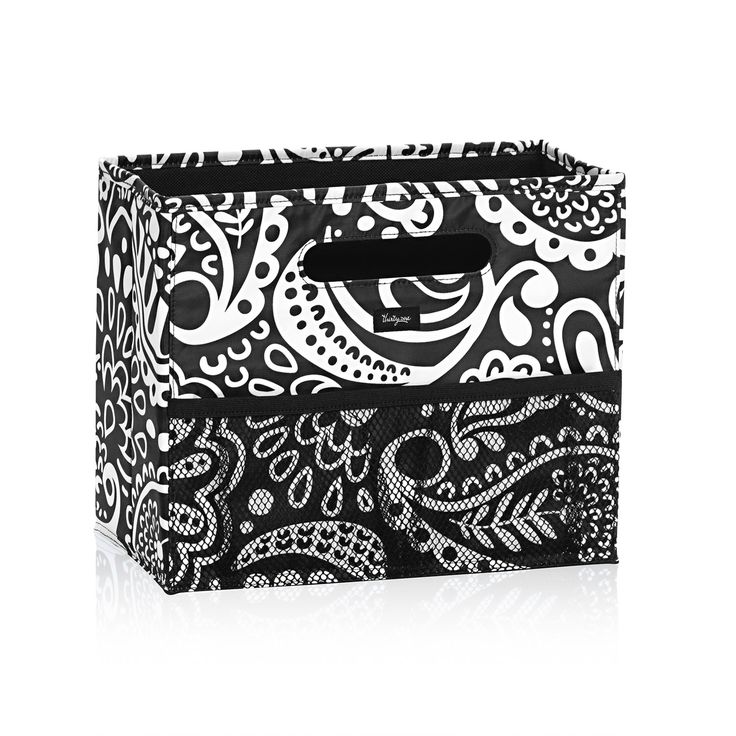
I have an entire collection of these fabric
file boxes from Thirty-One Gifts because
they're perfect for my I need to see it/
drop and run
styles.

  • The successes: The open-top file holder on the counter did a good job of keeping my labeled files in order (successful plan), but I'd expanded it as far as I could, and had resorted to stacking things on top of it (unsuccessful implementation). I needed to replicate the concept in a bigger space.
  • Small steps: The small file cabinet in my office had become more of an archive than a functioning organizational system. I'd initially considered moving it out of the office and replacing it with open storage, but that was too big a task for the time I had available. Instead, I started by sorting through the bottom drawer to toss outdated files and move materials to be "archived" out of prime real estate. This  freed up space I could then use to house the materials from the overstuffed countertop file.
  • Yes, it has a home: Archived files, all of which could be filed under two topics, needed a new home. For now, they are in a file holder in the basement. Labeled. This gives me time to consider whether or not their current home will be their permanent destination. Meanwhile, I moved the active materials into their new home in the now-much-lighter bottom file drawer.
  • Let it go: Any time we sort any place (counter, file drawer, desktop, closet) is a perfect time to get rid of anything outdated, uninteresting or no longer of use. I'm happy to say I did some shredding and recycling, reducing all of the piles involved. Less stuff means fewer homeless items and more streamlined storage.
  • Easy upkeep: Moving from an open file to a file drawer is a major test for an I need to see it personal style. Because I moved a big chunk of materials I will access frequently into the same (closed) space, I am optimistic that out of sight won't mean out of mind. Labeled file folders allow me to accommodate my drop and run organizational style, and, if necessary, I can label the drawer as well to create a visual reminder of its contents. Even better, because there's room to grow, the new home for my files should last a while.
While it's rare that I go through the STYLE process start-to-finish in one day, (let alone only part of one), it's possible to do so when the goal is updating systems that are already soundly STYLE-based. In this case, an investment of a couple of hours yielded a beautiful, empty counter. 

Do you have a system that needs revamping? Which step of the STYLE process can you take today? 


Wednesday, April 19, 2017

Brain Back-Ups

Photo: mistockshop via Pixabay
I am the notebook queen. As a writer, I never want to risk losing a good idea, so I have notebooks in a variety of places: the car, the chest beside my bed, my office, the kitchen. Inside every purse I own.

These notebooks collect my writing thoughts, but they collect other things as well. The titles of books I want to read. Things I have to do. Stuff I want to remember.

As organizational systems go, they're not the best, but I don't expect them to be. Their purpose is to work as a temporary measure until I can get the information where it belongs -- in my calendar or on my to-do list. Without my notebooks, a lot of information would slip away, or, just as bad, I'd be forced to try to remember it all.

I guess you could call them my brain back-ups.

When you think about it, multiples are common in organizational systems. We don't have just one cabinet in our kitchens or one drawer for all our clothes. Multiple tools in various places or serving various functions can be efficient if we have a system for their use. And they work especially well if we use them to target our weak spots.

For me, keeping track of everything in my head doesn't work (weak spot), and seeing reminders of what I have to do does. Sure, I could put it all on my phone, but that doesn't work as well for my I need to see it personal style as going "old school" with paper and a writing implement. And, using notebooks instead of scraps of paper helps keep things contained, as well as limiting the number of places I need to look to see where I might have written something down.

Is there a weak spot in your system? What measures can you put into place to shore it up?

Thursday, February 9, 2017

3 Keys Thursday: 3 Key Questions to Ask About those Piles

Dodgerton Skillhause via Morguefile
If you're a regular reader of this blog, you know I'm an I need to see it/drop and run person.

This combination makes me the Queen of Piles.

This drives my husband a little bit crazy, and, truth be told, it bugs me, too.  While I'm still very much a work-in-progress, I have found a few ways to deal with the piles, and even make some of them go away.

Do you put things down instead of away? Here are three questions to ask yourself so you can do things the other way around.

Is it always the same stuff? At my house, it's usually the homeless items that end up in piles (next to the things I don't want to forget to take care of). While I can't quite bring myself to get rid of the reminder piles, eliminating the piles of homeless items is as simple as finding them a home.

Is it always the same place? Most homes have spots that are clutter catchers -- the kitchen counter, the dining room table, the dresser in the bedroom. Ask yourself whether the items that are piled there should be stored nearby, or if the spot is merely convenient. Then, organize accordingly.

Will a strategically placed container solve the problem? If so, maybe, just maybe you can keep the pile. Just make sure that the container is sized properly. Too big, and you'll lose sight of what you need. Too small, and you might as well just keep the original pile.

As an I need to see it/drop and run person, I've come to terms with the fact that piles are a part of my life. But, by asking some strategic questions and employing the right tools, I can keep them to a minimum.


Wednesday, January 18, 2017

The Perfect Tool at the Perfect Price

If you've been reading this blog for more than about thirty seconds, you know I'm all about the right tools for the job. And, if you've been reading for a while, you know that, while I like to splurge occasionally when I'm convinced the container is just right, I usually start my search in clearance bins and dollar stores.

I've found a lot of great supplies at great prices. Accordion folders on the clearance racks at Staples. Paper organizers and plastic bins at Dollar Tree, and, most recently, my perfect planner, in the dollar bins at Target.

But two weeks ago, the same week I found my planner, I found what is, perhaps, my favorite set of file folders ever.

While I might have thought to label a folder "Today is the Day," (above) I tend to stick with more utilitarian names like topics or days of the week. I would never have thought to label my folders:


And yet, these names are so perfect! It's as though someone knew just what I needed -- how cool is that? All three folders have already been put to use, with papers in keeping with their themes placed safely inside. 

Now I just need to find the right place to put them -- some place that satisfies both the purpose of having a folder in the first place (to tuck things away) and my I need to see it  personal style, which is exacerbated by the visual appeal of these fun folders. I don't want to put them away, so I'm trying to find a place where I can see at least a portion of their brightly colored fronts and/or fun patterned tabs.

So, the morals of this story are a perfect fit for my philosophy. Good organizers can be pretty and  functional without being expensive. 

And, when you find the right fit, whether for your style or your circumstance, organizing can actually be fun.

Thursday, November 3, 2016

3 Keys Thursday: 3 Organizational Tools I Should Never Be Without

Dodgerton Skillhause via Morguefile
Yesterday, I wrote about my very bad plan of not using the organizational systems I had in place. Really, the only thing at the root of this was laziness, but, in thinking more about it, I realized that being unprepared can also pose a significant stumbling block.

I really don't need anything fancy, but there are a few key items on which I depend:

A writing implement: If I'm unable to write things down, I'm in trouble. Sure, I usually have my phone, but, when it comes to keeping track of appointments and to-dos, I'm more of a paper-and-pencil girl. While not having the right pen can be an issue, not having one at all is a recipe for disaster.

My steno notebook. This semester, I began using a steno notebook to keep track of everything I need to do for my classes. The layout is perfect for my I need to see it personal style and it allows me to focus on one list at a time.

My phone. Today, I came home for lunch, and while I was there, changed bags. I was on my way back to work before I realized that my phone was in the bag I'd used in the morning. Hardly a disaster, especially since I don't use it to keep track of tasks. But, I do use it to keep in touch with my family, check my email, see what time it is (I rarely wear a watch) and pay for my end-of-the-workday Starbucks. Even though I don't need my phone for organization per se, having it helps me feel more connected and, therefore, more in charge of my day.

How about you? What three tools do you depend on?

Wednesday, October 26, 2016

Taking Stock

Photo: Lauren Mancke via Minimography
I am the sort of person who leaves multiple windows open on her computer. (Multiple doesn't begin to describe it). When I discovered that I could create a dozen or more different desktops on my MacBook, this made me love my laptop even more than I already did.

Any guesses what my predominant style is?

Whether our styles reveal themselves in an unmistakeable I need to see it, drop and run or cram and jam fashion, or in a subtler, more nuanced way, we all need to pause and take stock sometimes. For me, last Saturday was that time. This was not surprising; the end of the month was, at that time, a little more than a week away.

So, I set out to make a master list that would enable me to replace the visual clutter with one neat list. My goal was to close out the open windows on my computer and streamline the to-do lists on my desk.

I started out with one measly piece of paper, but quickly decided that to really get my house in order, I needed separate pages for key categories. This method would accomplish two things: it would organize my thoughts (by category) and keep my lists shorter, and therefore less overwhelming. I briefly considered going back to the color-coded list format I use in the summer, but decided that I'd be better off with pages in a notebook.

So, armed with my calendar, my work to-do notebook (each class has its own column) and my spiral-bound notebook, I dug in.

First stop: my laptop. I had tabs open in my browser for articles I wanted to read, use for blogs or reference for class, along with references for writing projects. I had presentations in various stages of completion, some old (for reference) and some current. I had writing projects galore. Beginning with the browser tabs, I took one thing at a time, adding each to the appropriate list and then closing it out.  Because it's easier to access links by simply clicking on them, I created a master list of the links I had open and wanted to return to and emailed it to myself. Now, instead of leaving all those tabs open, I simply have to open the email and click on the link I want.

Second stop: all those notes on my desk. This part was easy, because, as it turns out, there weren't that many of them. Apparently my paper system is working better than my electronic system -- something that was a nice surprise, but, in retrospect, shouldn't have been surprising at all. I am, at heart, a paper-and-pencil girl.

Third stop (which perhaps should have been first): the multiple piles that scream, "An I need to see it/drop and run person lives here!" Why weren't they first? Because I'm more organized than I look. The really important, to-do list qualifying stuff is on my computer or my desk.

As I worked on the list, a funny thing happened: I started to get really excited about tackling all of the things I was writing down. While visual reminders can be helpful, having too many of them for too long can become exhausting, and therefore counterproductive. After a while, they all blend together and become a congealed mass of things to do.

Thank goodness I have my nice, neat list.

Wednesday, October 19, 2016

Stick to It

Pixabay
I love Post-it Notes. They stick without being sticky. They come in a variety of shapes and sizes. Perhaps best of all, their bright colors are a great match for my I need to see it personal style, not only calling attention to the things I need to do, but standing out amid a sea of nondescript to-do notes on a desktop or table.

Last April, I wrote a post for CatholicMom.com about Postit.com, a site by the makers of Post-it Notes, filled with great ideas for ways to use them. I'm not even going to try to compete with the creative ideas you can find there, but I wanted to share a couple of my favorite uses.

  • Family notes. At our house, the place to find a note from someone who has left the premises is on the range hood in the kitchen. A sticky note attached to the range hood is an eye-catcher, almost directly in the line of vision, and extending beyond the range hood to make its presence -- and message -- known.
  • Calendar notes. A few years ago, I bought one of those large, Post-it Note calendars to use as a planning tool, but it ended up not working for me -- at least not in the traditional way. Although I've reverted to my usual calendar/planner set-up, I've used those pages as project planners, even creating an entire fictional writing workshop (with color-coded events) for a character in one of my novels. I also use single sticky notes to remind myself of recurring events and due dates (you know--those "third Thursday of the month" events) a week ahead of time. I simply write the name of the task on the sticky note and put it on my desk calendar so that if I need to prepare anything, I have time to do so.
  • File folder tabs.  I love all things stationery, and colorful file folders in fun prints are one of my favorite things. I use and reuse them until they begin to tear or become otherwise unusable, and they often serve multiple purposes before I retire them. Consequently, I hate to write on the tabs. I could write in pencil (that's what I do on manila file folders), but pencil doesn't show up well on colored file folders, so instead, I put a small, square sticky note on the tab and label it in Sharpie marker. If I'm feeling really fancy, I might even pull out my label maker. Then, when I'm ready to use the folder for something else, I just replace the Post-it Note, under which is a pristine file tab.
Inventive? Not terribly. Functional? Very!

What's your favorite way to use a sticky note?

Wednesday, September 21, 2016

A Place for Everything, An Item for Every Drawer

Now this would be a cool
addition to my office!
Photo: Pixabay
In my office, I have two unassigned drawers -- that is to say that they currently serve as "home" to no specific items. One has served several purposes, but, because of my I need to see it style, none of those plans have stuck. Right now, it holds some writing projects and some "miscellaneous files" (always bad news from an organizational perspective), but I wouldn't call the space well-utilized.

The other is drawer is a small one, the lone, empty drawer in a three-drawer unit. Its companions hold, among other things, FitBit wristbands and toilet paper tubes decorated with washi tape and pressed into service as cord storage. Unlike my drawer-in-limbo, it's an organizational coup -- easy to use and in keeping with my styles, I can find what I'm looking for in under five seconds. Because these small drawers have clear, labeled fronts, I can not only glimpse the contents, but I also know what's inside even before I open them -- the labels remove all the mystery.

As an I need to see it person, I need this, ahem, transparency. That's why my wonderful, large drawer with projects and miscellany is a drawer in limbo in a room that still has piles that need sorting. I could take a page out of the I know I put it somewhere handbook and transfer the stacks from my counter (which looks much better this week, I must say) to the drawer. Unfortunately, that would simply hide the problem, rather than solving it; my counter would look better, but I wouldn't be any more organized. Worse yet, those papers could sit in that drawer, hidden from sight, for years before I paid attention to them again, which means that I'm taking a significant risk if I put anything important or time sensitive in that wonderful, practically empty space.

Meanwhile, in another spot in the office, a rolling bin has been pressed into service as file storage for my active class files. Previously, it collected dust as the official storage place for all of my notes on organization, but, when I needed a place (besides the chair in the living room) to keep my class files, I rethought the plan. I moved the organization files -- which I don't need to access on a daily basis -- to the family room to create space in my office for the files I touch every day.

What, you may ask, is the purpose of all of these stories?

Balance.

Balance between overstuffed and just right = room to grow (my empty/unassigned drawers).

Balance between my I need to see it personal style and my drop and run organizational style = a "just right" container that allows me to put things away (instead of down) in a place where they're visually accessible.

Balance between the easy answer and the one that makes sense = time + patience + trial + error.

Pixabay
It's amazing how easily we fall into -- and stay stuck in -- habits that don't work. Getting organized and staying organized means constantly reassessing what goes where and whether or not the storage we choose is the best choice. It means finding what works and replicating it so that eventually, everything has a home that's as easy to use as the default surface we choose when we're too exhausted to put things where they belong.

Needless to say, it's a process.

And sometimes, empty drawers share space with homeless piles.

Thursday, September 15, 2016

3 Keys Thursday: 3 Key "Night Before" Ideas

Dodgerton Skillhause via Morguefile


This morning, as I was racing around before work gathering my supplies, I asked myself why I don't pack my bag the night before. Then I remembered this picture:

Yep. That's my I need to see it personal style in action.
With one schedule on MWF and another on TuTh, if I don't lay out all of my supplies just before packing my bag, I'm afraid I'll forget something. (Personal experience tells me there's good reason for me to have this concern). My global nature (the need to see the big picture) and my I need to see it style collide, making what sounds like a very practical idea impractical. 

Although packing my work bag the night before doesn't always work for me, here are three key things I could do the night before to save myself time in the morning.
  • Pack my lunch. The contents of the kitchen are not going to change between dinner one night and mid-morning the next day. Packing my lunch, stashing it in the fridge and leaving myself a bright, visual reminder (fuchsia sticky note, anyone?) on the back door will save me precious get-out-of-the-house time.
  • Lay out my piles. This is something I'd be more likely to do if I lived alone. But, since other members of my family tend to object to my taking up the sofa or dining room table with my class-by-class files, I don't do this. I guess this is just one more incentive to clear off the counter in my office.
  • Check my calendar.  During the semester, my days have a pretty predictable rhythm, but there are always those days when extra appointments or meetings sneak in. Ideally, I've done a review of the week ahead sometime between Friday and Sunday night, but a quick peek at the calendar the night before is always a good idea. In addition to refreshing my memory for places I need to be and people I need to see, it gives me the opportunity to pencil items from my to-do list into my schedule. 
Pixabay

Notice that I said these are things I could do. Now I just need to work on putting that could into action.

How about you? What are your morning time savers?

Thursday, September 8, 2016

3 Keys Thursday: 3 Keys to Overcoming Motivational Obstacles Unique to Your Styles

Dodgerton Skillhause via Morguefile
I've been writing about Organizing by STYLE for over a decade, so you'd think I'd have discovered the link between my styles and motivation long ago. Not true. In reality, it took me until last weekend to make the connection.

Thankfully, the solution was an easy one; merely listing my accomplishments at the end of the day took them from invisible to visible, satisfying my I need to see it personal style and salvaging my motivation (and my pride).

Yesterday, I wrote about the motivation issues that may arise naturally from our personal and organizational styles, so today, I'd like to share three keys to bringing motivation back.

Listing. While these serve as proof of accomplishment for the I need to see it personal style, they serve as item locators for those with the I know I put it somewhere organizational style. Being unable to find something you've stored "in a safe place" is a real motivation killer. Cheat sheets bring order and a system to the sometimes haphazard organization of the  I know I put it somewhere organizer.

Chunking. A popular strategy for saving time (run all the errands that are in geographic proximity at the same time) and memory (chunk bits of information into related groups (think of phone numbers) to get more information into short term memory), chunking can work as a motivator, too. The I love to be busy person can actually see progress when he or she breaks organizational tasks into bite-sized pieces that can realistically be accomplished between meetings, appointments and practices. The drop and run organizer can save time digging through piles if each pile ("chunk") contains one category of items. It may take a little creative dropping, getting into the habit of putting all the items for one activity in the same spot, but it's the beginning of a system.

Containing. Choosing containers that match our styles increase our motivation to put things away instead of down, and to use the organizational systems we set up. Cram and jammers whose containers are large and/or flexible are less likely be defeated by crumpled, ripped or broken items. I love stuff folks protect their collections by containing them in ways that keep them safe and out of harm's way.

It's hard not to get discouraged when our styles don't match those of our Type A organizer friends, but remember that consistency is key, no matter your styles. Finding tools that work and using those tools consistently leads to habits and systems that work because they've arisen out of what comes naturally. Celebrating small successes and using tools whose form, function and style are a good fit for you keeps motivation high and the piles of stuff low.

Even better? It feels a lot less like work.

Wednesday, September 7, 2016

Motivational Mishaps

Created with Canva
Last weekend, I discovered one of the drawbacks of the I need to see it personal style. I don't know why it surprised me (but it did), and it got me thinking about the drawbacks that accompany the other styles.

Let me assuage any fears that this is going to be a "beat up on the styles" post. I hope you know by now that's not my, um, style. We're all aware of the drawbacks of our lovely styles when it comes to organization. What occurred to me the other day is that they get in our way from a motivation perspective as well.

As an I need to see it person, I tend to downplay any progress I can't see. I can spend an entire day chipping away at things that need to be done, but if I can't see any difference by the end of the day, I feel as though I've done nothing.

Those with a cram and jam or I know I put it somewhere organizational style can have exactly the opposite problem. They think they're more organized than they actually are. Because things are put away--all in one place for the cram and jammer and without an overall plan for the  I know I put it somewhere organizer--they look organized. Other people (unsuspecting parents, teachers and spouses, for example) might even believe the cram and jammers and I know I put it somewhere organizers are organized--until they look more closely. Then, when they can't find what they need, those with these styles are often blindsided, embarrassed and overwhelmed.

People with an I love stuff personal style may have a similar problem. To them, their collections and piles are organized, and their love of their belongings makes them resistant to any recategorizing of their beloved treasures. Change is hard for the person who has all her stuff just the way she wants it.

Time, or the lack of it, can be a motivation killer for other styles. Drop and run organizers often rely on time as a retrieval cue, as in, "no, it can't be that deep in the pile because these papers are from last week," leading them to struggle to find things that don't adhere to the drop and run schedule hierarchy. Folks with an I love to be busy personal style may never feel fully organized due to time constraints and may constantly feel that they're playing catch-up when it comes to getting their supplies for even one activity organized.

Is it any wonder I prefer a lighthearted approach to organization?

As with anything else, though, knowing these things is the first step to overcoming them. Tomorrow, I'll share three keys to help manage those motivational mishaps.

Wednesday, August 31, 2016

Semesters May Change, but Styles Remain the Same

This is how an I need to see it organizer packs her bag
for work. Material for each TTh course is clustered together.
What's on the arm of the sofa? The class I teach MWF. 
This week, I switch gears and resume my teaching responsibilities. If I ever doubted whether or not my styles (I need to see it/drop and run) have changed over time, all I need to do is take one look around my house.

They haven't.

Tomorrow, I'll share 3 key tools that are keeping me organized this fall. (And yes, my sofa is one of them -- sort of). Then, in the coming weeks, I'll be revisiting key tools for each style. If you have one (or more) that you love, share it (them) in the comments below, and I'll try to incorporate your ideas into a future post.

Have your styles changed? Click here to take (or retake) the quiz and find out. My theory is that while our styles may become more defined over time, our default styles remain constant.

What do you think?


Thursday, August 25, 2016

3 Keys Thursday: 3 Keys for Creating Your Reference Spot

Dodgerton Skillhause via Morguefile
The school district in which I live started school last week, which means parents here are already drowning in those first week of school papers and announcements. While a countertop or table is a good place for your family drop spot, you'll want to create style-appropriate storage for the things you'll want to hang onto for reference--school calendars, lunch menus, field trip information, etc.

While your styles should dictate what this long-term reference spot should look like, function should lead this charge. Because most of the information that goes into this reference spot will be rendered obsolete in a short time, what matters most is ease of access.

Here are a few things to consider as you create this sanity-saving system.

Who's the primary user of this system? If you are, then your styles trump everyone else's. Like binders? Use one. Prefer accordion folders, a fancy clipboard or a family bulletin board? Go for it.
Be careful, though -- this also makes you the disseminator of information. If you want others to contribute to and access this storage, you may need to make it friendly to other styles as well. Want to have it both ways? Create a system that works for you and a drop spot that works for everyone else.

How will you manage the flow of papers? Are you a keeper or a tosser? Not you personally, but your style. If you write information down, then toss the form or flyer, you won't need much paper storage, but if you keep the original as a reminder until its date has passed, you'll need to make provisions for filing or posting the paper. Function is key, but let your styles be your guide.

Where will you put it? This goes back to who's using the system. If you're a Type A organizer, you probably have a nice file drawer somewhere with all of this information tucked inside and labeled, but if you're an I need to see it or I know I put it somewhere person, the words "drawer" and "inside" just made you cringe. If you want your family members to look up their own information, your system will look different than it will if you want to be the information clearinghouse.

No judging here--I can identify with the information clearinghouse model. If I know where things are at all times, they don't get lost. Be honest with yourself about how you want this to work, not how you think it should work. If you're most comfortable being the keeper of the originals, then use that part of your style to make yourself the back-up--an external hard drive of sorts. Encourage your family members to create their own parallel systems, with you as their safety net. This can be a great way to help kids build organizational systems of their own.

If your child's school has gone paperless, the solution is even simpler. Bookmark key locations on  your phone or computer or, if you prefer, designate a home for a cheat sheet where you can write all this down. You can use a white board, a single sheet of paper (on a clipboard or bulletin board, perhaps) or, especially if you have kids in different schools, a tabbed notebook.

One last note. This is not the time to create the be-all, end-all stylishly perfect system. If you've done it before and it works, you're all set. If you haven't and are just getting started, it will evolve over time. Either way, all of this information will be in and out in a year or less, so don't spend a lot of time creating a system that should serve you.

Have a great idea to share? Post it in the comments below.

Wednesday, August 24, 2016

Creating My Reference Spot

I've often heard professional organizers suggest
using tabbed binders for all family information.
It's a great idea, but not a fit for my styles.
Photo via Pixabay
Two weeks ago, I wrote about three keys for getting organized for the school year. I also promised to talk a little more about managing the reference spot, a.k.a. the place to store all that stuff that comes home to stay (but you can't get rid of) in a future post. But, last week, I got sidetracked by helping to manage my daughter's transition to college, and ended up writing about that instead.

This week, after getting her dropped off and settled in, I'll be putting together my own reference spot because, even though she's in college, there's information I want/need to keep available. And, since this is a whole new experience for our family, having easy access to information isn't just about organization; it's about mental peace as well.

I'll be the primary user, so I'll set it up based on my styles and preferences. This puts me in a position to be the disseminator of information rather than the facilitator, but I'm okay with that. My husband's styles are different from mine, and he'll filter the info as it comes in and store it in his own way, while my daughter will be gathering and storing the information she needs from her remote (to us) location. We'll be like three nutty squirrels stashing nuts in our own trees.

Sorry. Couldn't resist.

Because I've been gathering information for close to a year, the bare bones are already in place, and my system just needs a little fine tuning. The open-top file that initially housed pertinent information for all the schools she was applying to has been cleared and transformed to the home for all information from her chosen school. Initially, that was sufficient, but preparing to get her from here to there while keeping track of everything in between has convinced me of the need for subfolders. Those are at the top of my list of "Keep busy, Mom" projects as I adjust to our now empty nest.

Tomorrow I'll tackle three key questions to ask yourself as you set up your own reference spot. And, to make sure I keep that promise, I'm writing that post.

Right now.

Files like this work better for my I need to see it style
than more traditional options do.
The mesh pockets in front hold the small notebook
we took to orientation as well as key brochures.
Photo: Thirty One Gifts